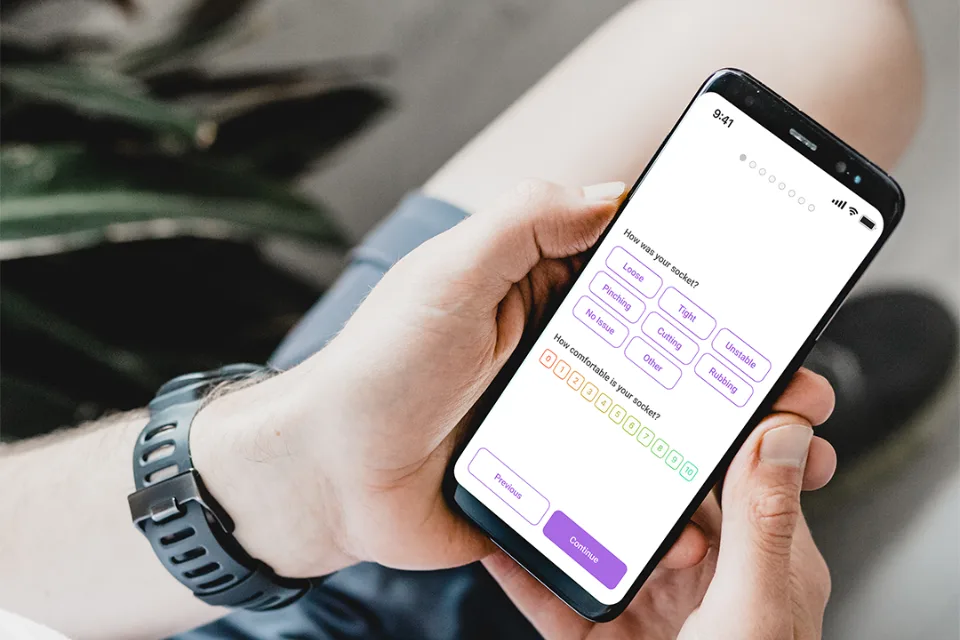
riiPort
Helping veterans carry their day-to-day experience of wearing a prosthetic limb into the clinic
Context
Every day, someone wearing a prosthetic limb faces the same quiet question: will today be a comfortable day? A well-fitting socket isn’t just about comfort — it shapes whether someone can do the ordinary things that make up a life, from a short walk to keeping up with family. But that daily reality is hard to carry into a clinic appointment that might only last 30 to 60 minutes. Details like pressure points, patterns of discomfort, or how fit gradually changes are easy to lose between visits — and clinicians, working from limited in-appointment notes, are often left reconstructing weeks of someone’s life from memory.
riiPort set out to close that gap: a way for veterans to log how their socket was really feeling, day to day, so that information could travel with them into the room.
The project was funded by the Defence and Security Accelerator (DASA) through its Veterans’ Health Innovation Fund, backed by the Office for Veterans’ Affairs, and built in partnership with the University of Southampton and the veterans’ charity BLESMA. I ran it at Radii Devices alongside the Clinical Lead, over 18 months from May 2023 to December 2024.
Research
The project moved through three stages. It began with in-depth consultations to understand the daily reality of prosthetic use from both sides — 13 veterans and 7 healthcare professionals, spanning prosthetists, physiotherapists, and rehabilitation consultants. From there, the team moved into collaborative design workshops, reviewing wireframes and prototype concepts directly with veterans and clinicians, checking every iteration back with prosthetists to make sure the data being collected would genuinely support better fitting decisions. The final stage saw a working proof-of-concept tested by veterans in their own homes over several weeks.
One thing that became clearer as the project went on: clinicians were cautious about only ever hearing from patients on their worst days. That shaped how later questions were framed — less about rating pain on a scale, more about tracking impact on everyday activity over time.
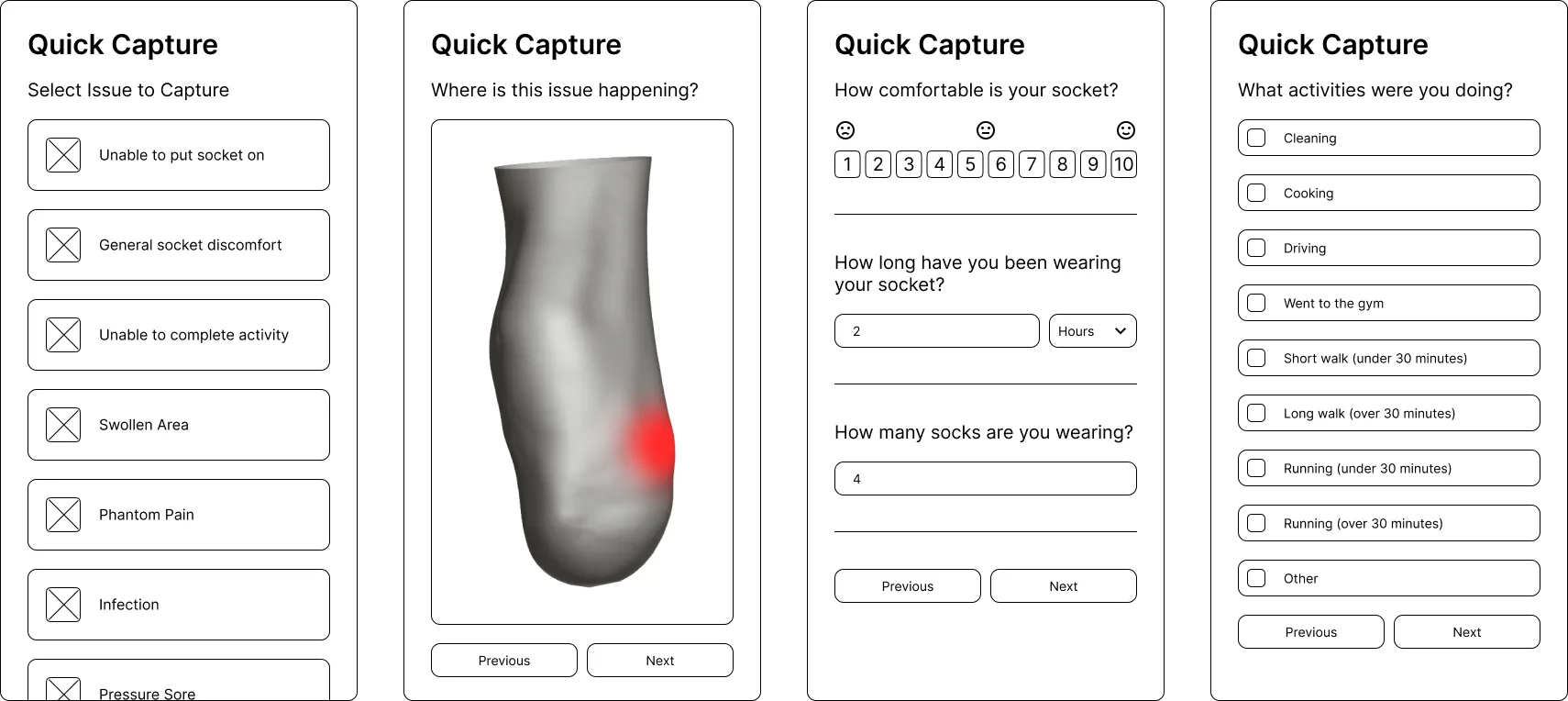
Early Wireframes
High Fidelity Wireframes
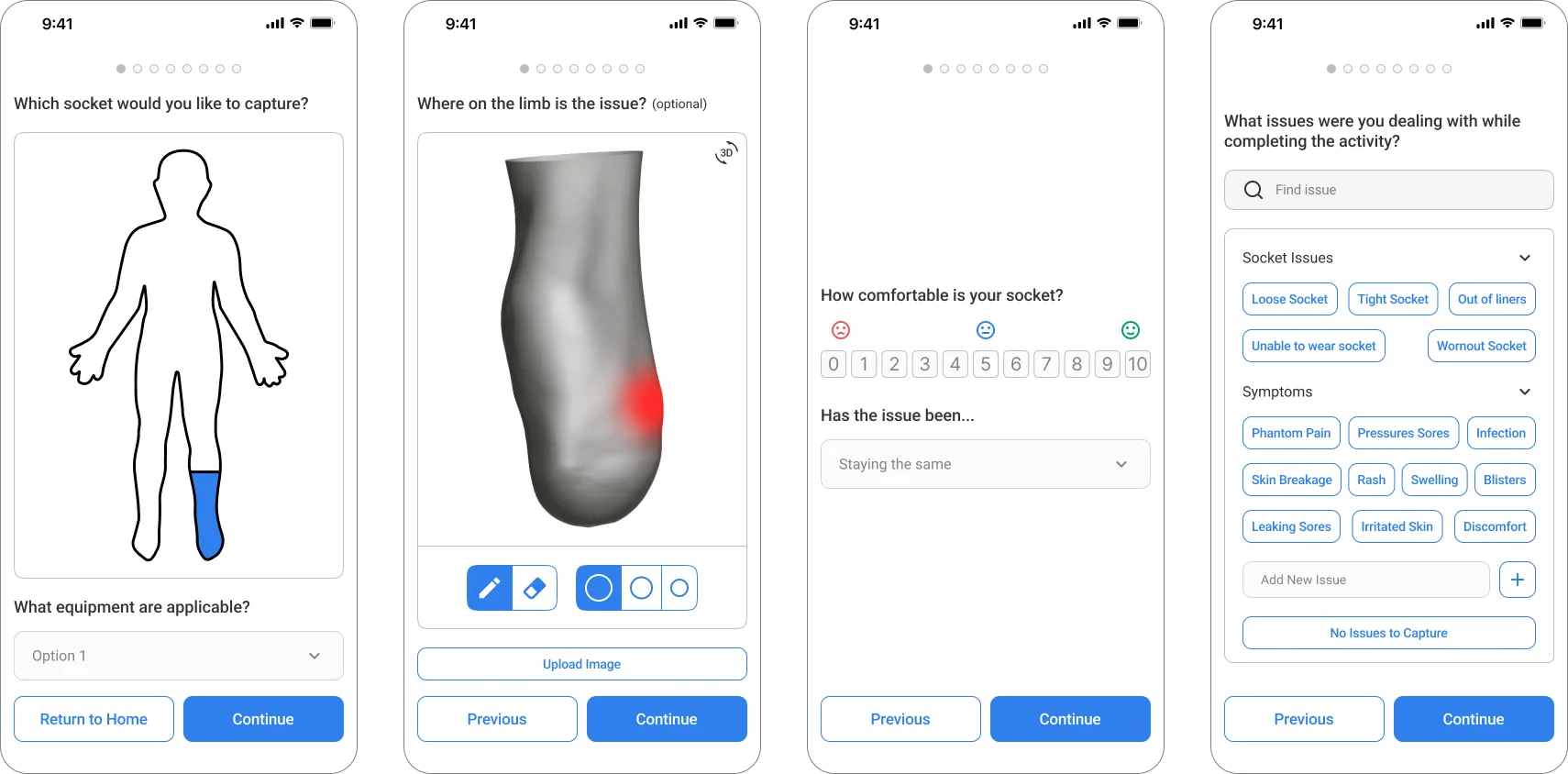
From Research to Design
The earliest concept included an interactive 3D limb model, letting veterans mark pain locations directly on a visual of their own residual limb — prototyped in Figma as one part of the wider flow. That thinking later found a home in riiPort, Radii’s clinic-facing product, where visualising change directly on a 3D model now plays a real part in how clinicians review a socket design.
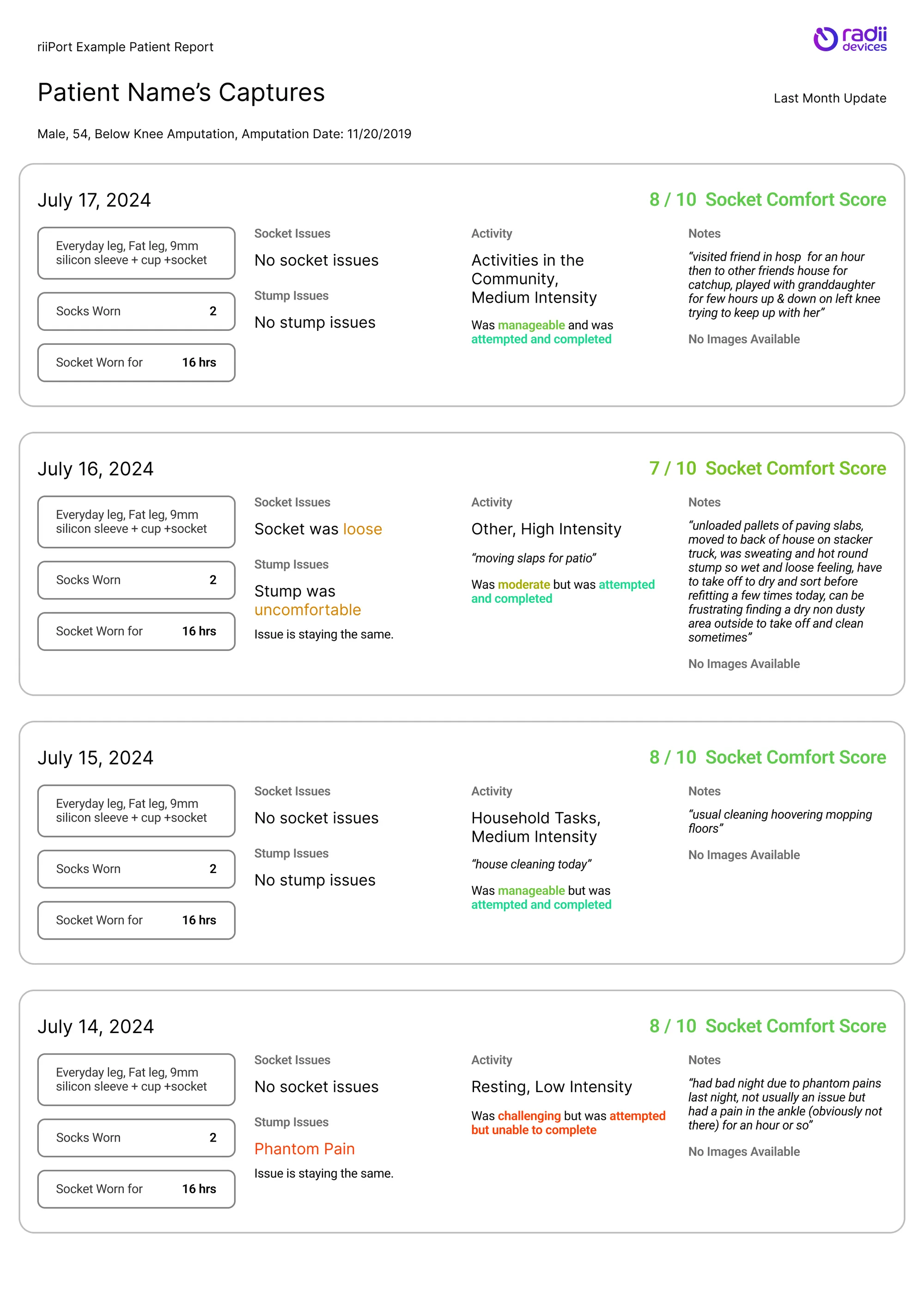
What did get built was designed around low friction: quick, ad-hoc check-ins of around 60 seconds, so logging an issue didn’t compete with the rest of someone’s day. It worked across mobile and desktop, since not everyone had reliable access to both. And reporting was anchored to the socket comfort score clinicians already use day to day, so what a veteran logged at home translated directly into something usable at their next appointment — building comfort profiles over time rather than a single snapshot.
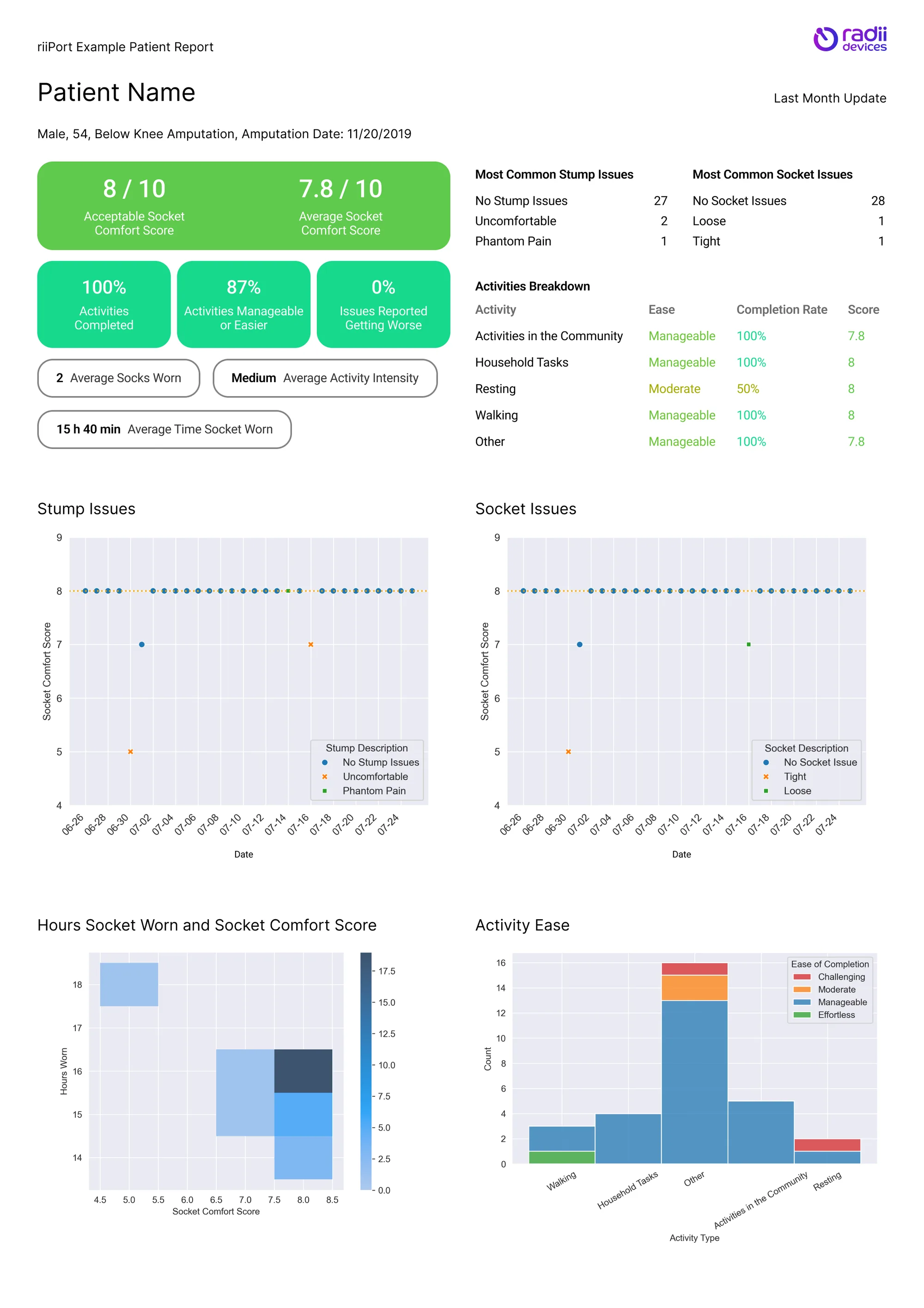
Outcome
Early testing brought consistently positive feedback. One veteran involved in the project put it simply: “getting fit in hospital doesn’t reflect everyday life, and this kind of ongoing feedback is vital to prosthetists.” Clinicians reported that the data let them make more targeted adjustments, directly addressing the comfort issues patients were facing day to day.
Part of a Bigger Picture
riiPort was never meant to stand alone — it sits alongside riiForm, Radii’s core clinical software, as part of a broader effort to close the loop between what a patient experiences and what a clinician can act on. DASA’s backing for this work went on to play a real part in Radii securing a major follow-on contract with the US Department of Veterans’ Affairs. The project was published as an official DASA Innovation case study, and was later referenced by fellow researchers at the ISPO 21st World Congress in 2025.